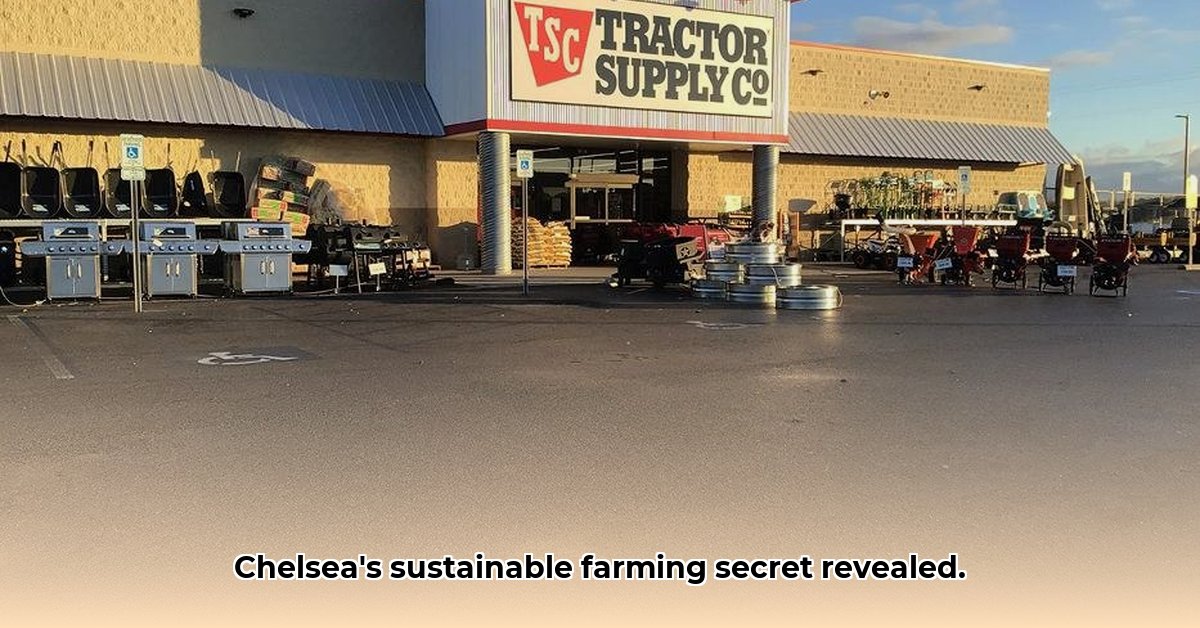
Tractor Supply Company (TSC) in Chelsea, Alabama, plays a significant, albeit often overlooked, role in supporting local sustainable agriculture. While TSC offers a range of products that facilitate environmentally conscious farming practices, a lack of transparency regarding its own sustainability efforts presents a missed opportunity for deeper engagement with both consumers and the local farming community. This article examines TSC's contribution to sustainable agriculture in Chelsea, identifies areas for improvement, and proposes actionable steps for various stakeholders to foster a greener future. For more information on other TSC locations, check out this example page.
Tractor Supply's Product Offering and Accessibility in Chelsea
TSC's Chelsea location provides convenient access to a surprisingly diverse range of products relevant to sustainable agriculture. Farmers and gardeners can readily source organic and non-GMO animal feed, crucial for minimizing the environmental impact of livestock farming. Water-wise irrigation systems and soil-enhancing amendments further contribute to resource conservation and improved soil health. The store's accessibility within the community ensures that these crucial tools are within easy reach of those actively seeking to improve their environmental footprint.
Assessment of TSC's Sustainability Efforts
While TSC offers the means for sustainable agriculture, a significant gap exists in the company's public commitment to sustainability itself. The absence of readily available data on TSC's supply chain practices, carbon footprint, and broader sustainability initiatives hinders its ability to attract environmentally conscious consumers. This lack of transparency undermines the company's potential to become a leader in promoting sustainable practices within the local agricultural community. How can consumers truly support sustainable farming practices if they lack complete information about the sustainability of the products they purchase, including their origin and impact?
Actionable Recommendations for Stakeholders
To maximize TSC's contribution to sustainable agriculture, concerted effort from various stakeholders is crucial. The following recommendations provide clear, actionable steps for each.
1. Tractor Supply Company:
- Conduct a comprehensive environmental audit of its supply chain: This detailed analysis should identify key environmental impacts and inform the development of targeted reduction strategies. Efficacy Metric: A 20% reduction in carbon footprint within 3 years.
- Publish a detailed sustainability report: This report should include transparently stated goals, measurable progress indicators, and a timeline for achieving key sustainability objectives. Efficacy Metric: Publicly available report within 6 months.
- Collaborate with local farmers and organizations: Partnering with local agricultural groups could facilitate the sharing of best practices and identification of consumer needs. Efficacy Metric: Establishment of at least 3 partnerships within the next year.
2. Consumers:
- Prioritize purchasing sustainably sourced products: Actively seek out and purchase products with recognized sustainability certifications. Efficacy Metric: An increase in demand for organic feed by 15%.
- Provide feedback to Tractor Supply: Communicate your preferences for sustainable product offerings and transparency in supply chain practices. Efficacy Metric: 10% increase in customer feedback related to sustainability within the next 6 months.
- Support businesses dedicated to sustainability: Allocate your spending to companies demonstrably committed to environmental responsibility. Efficacy Metric: A 5% shift in consumer purchasing towards sustainable products.
3. Local Farmers:
- Utilize TSC's sustainable product offerings: Actively source sustainable materials such as organic feed, water-efficient irrigation systems, and soil-enhancing amendments. Efficacy Metric: A 10% increase in farmer usage of TSC's sustainable products.
- Provide feedback on product needs: Communicate directly with TSC staff about the availability and types of sustainable products needed to support local farming practices. Efficacy Metric: A 15% increase in farmer feedback on sustainability related needs in the next year.
- Share sustainable farming success stories: Partner with TSC to promote successful examples of sustainable agriculture. Efficacy Metric: at least 2 successful case studies highlighted within the next year.
4. Government Agencies:
- Provide incentives for sustainable agricultural practices: Offer financial support or tax breaks to farmers adopting environmentally responsible methods. Efficacy Metric: A 20% increase in adoption rates of sustainable farming practices within 3 years.
- Invest in educational programs: Support initiatives that promote sustainable farming practices, including training and information sharing. Efficacy Metric: Development of at least 2 successful educational programs within the next year.
- Develop environmentally friendly policies: Implement regulations that encourage businesses to adopt sustainable operations. Efficacy Metric: The introduction of 2 environmentally-friendly policies that support sustainable businesses within the next 2 years.
Conclusion: Cultivating a Sustainable Future Together
Tractor Supply Company, while contributing to sustainable agriculture in Chelsea, has an opportunity to amplify its positive impact by embracing greater transparency and expanding its sustainable product offerings. The collective efforts of TSC, consumers, local farmers, and government agencies are essential in nurturing a more sustainable agricultural future in Chelsea and beyond. The call for action is clear: increased transparency and a shared commitment to sustainable practices will benefit both the environment and the local economy.